
 vn
vn en
en ja
ja ko
ko zh
zh


I was absolutely awestruck by the dramatic mountain passes, winding their way up as if on a ladder to the sky.

Winding from Mã Phục to Nà Tềnh, then navigating the breathtaking twists of Khau Cốc Chà, and continuing on to Mẻ Pia—these are just some of the awe-inspiring mountain passes that truly mesmerize travelers. They form an unforgettable journey through the scenic Northeast highlands, perfectly capturing the vibrant essence of Cao Bằng.
The Charms of Cao Bằng – Conquering Legendary Passes Amidst Emerald Mountains and Waters
From Mã Phục to Nà Tềnh, then winding through Khau Cốc Chà, followed by Mẻ Pia… these are the breathtaking passes that mesmerize travelers along the scenic route through the highlands of Northeast Vietnam – the vibrant beauty of Cao Bằng.

The winding, perilous road to the sky's summit captivates and enchants countless travelers.
We returned to the vibrant allure of the Cao Bằng highlands, a land of emerald mountains and waterways, just as the first summer thunderstorms swept through the Đồng Mu valley, to visit this border region of endless, towering peaks that sculpt winding, challenging, yet utterly beautiful mountain passes. These views leave every wanderer utterly mesmerized.
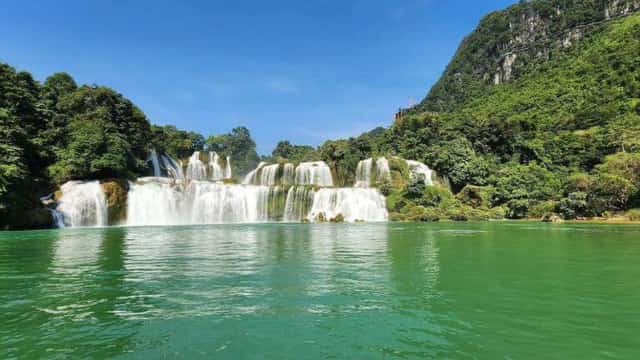
The majestic Bản Giốc Waterfall, at the very frontier of our nation.
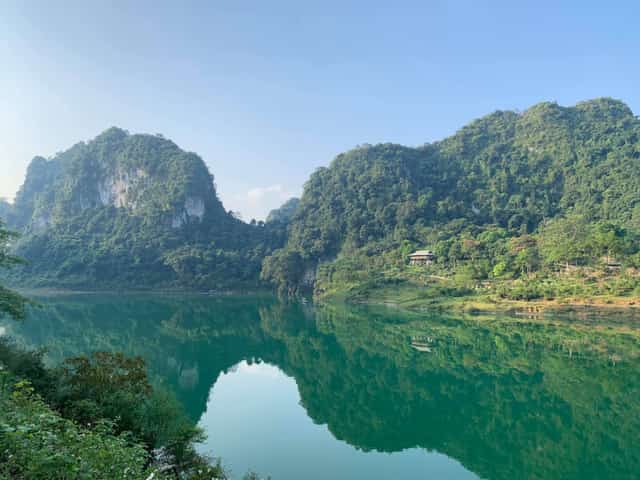
The vast and poetic Thang Hen Lake.
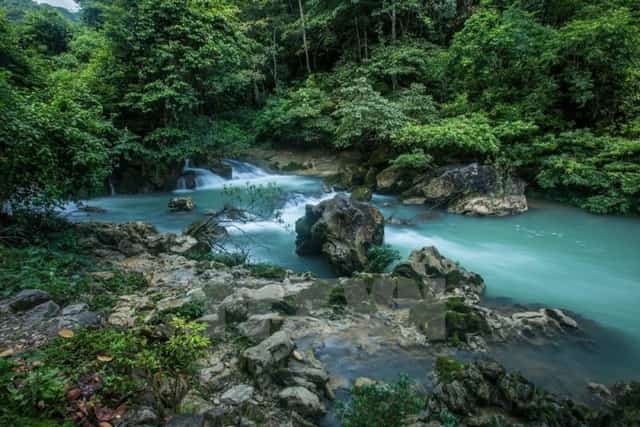
Pác Pó historical relic site, with its jade-blue Karl Marx Mountain and Lê Nin Stream.
Though not even a decade has passed, the old landscapes and familiar faces have changed remarkably. Alongside the captivating natural scenery and well-known attractions like Bản Giốc Waterfall, Thang Hen Lake, Ngườm Ngao Cave, and Pác Pó, many exciting new destinations have emerged, enchanting countless travelers: the Eye of Thủng Nà Ma Mountain, Phia Oắc - Phia Đén National Park, Nguyên Bình Bamboo Forest, Bản Sầm Waterfall, Nặm Ngùa Waterfall, Ngườm Pục Cave, Khuổi Ky Ancient Stone Village, and Bản Viết Lake...
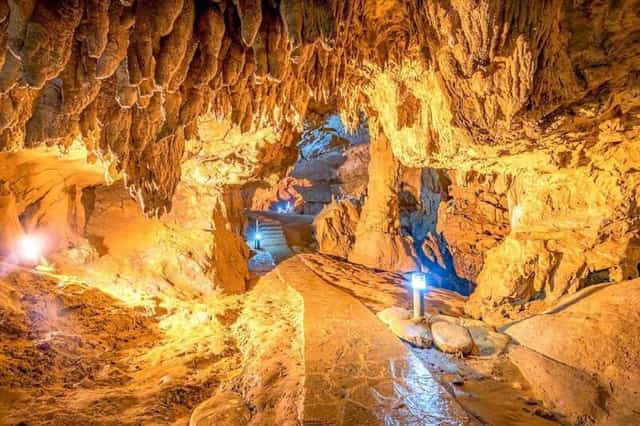
The mysterious Ngườm Ngao Cave with its millennium-old stalactites and stalagmites.
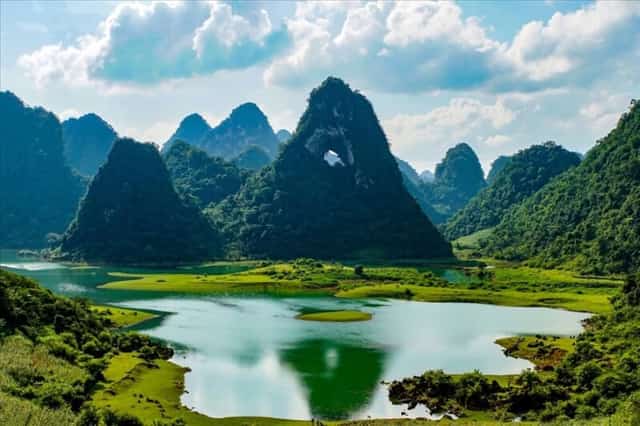
The Eye of Thủng Nà Ma Mountain, a fascinating new destination that has emerged in just the last five years. It's a place avid travelers often whisper about, a must-visit spot on their itineraries.
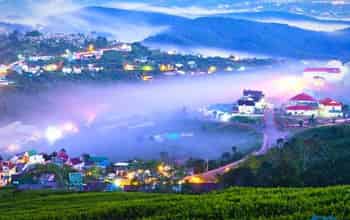
Setting off early from Cao Bằng city center, we witnessed the sunrise painting the hills crimson, illuminating the vibrant hues of deep red tiled roofs, brick walls, and tree lines. The entire city transitioned from night to day in a magical spectrum of colors, gradually shifting from deep purple to red, orange, and yellow, subtly appearing through the mist. It was an absolutely exquisite sight, making visitors feel as if they had wandered into a celestial paradise.
Travel enthusiasts are usually quite familiar with Vietnam's 'Four Great Passes': Ô Quy Hồ, Khau Phạ, Mã Pí Lèng, and Pha Đin. On this return journey to explore the charms of Cao Bằng, we continued our conquest of four passes within the Non nước Cao Bằng UNESCO Global Geopark: Mã Phục Pass, Mẻ Pia Pass, Khau Cốc Chà (Trà) Pass, and the 'King of Passes,' Nà Tềnh, with its 20 spectacular hairpin turns.

Mã Phục Pass is 3.5 km long, approximately 700m above sea level, and winds through 7 challenging ascents.
From Cao Bằng City to the Eye of Thủng Nà Ma Mountain, you must cross Mã Phục Pass. This pass is located in Cao Xuyên hamlet, Quốc Toản commune, Trà Lĩnh district, marking the border between Hòa An and Trà Lĩnh districts, about 22 km from the city center. The pass gets its name, Mã Phục (meaning 'resting horse'), from two large rocks that face each other, resembling two horses bowing down.
The pass is also linked to the legend of the talented mountain chieftain Nùng Chí Cao, a Tày ethnic leader who famously drove back Song dynasty invaders, restoring peace to the northern mountainous region. Upon reaching the summit of a steep slope, his horse stopped and collapsed from exhaustion. This image of the resting horse (Mã Phục) perfectly captures the pass's grandeur and formidable nature.
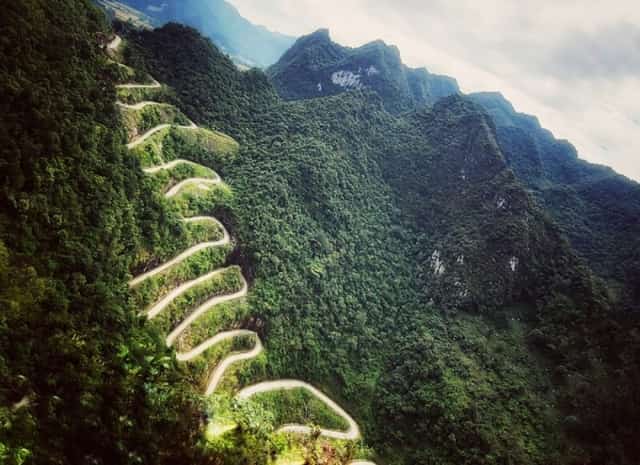
Khau Cốc Chà is part of the Northeast loop, a must-visit for wanderers exploring the mountainous terrain of Cao Bằng.
Next, a major highlight of this trip was the magnificent 15-tiered zig-zag pass, with turns so sharp they feel like they could overturn your vehicle, drawing in countless experienced riders eager to conquer it.
In the Tày language, 'Khau' means 'pass,' and 'Cốc Chà' is the name of a Tày village at the pass summit, also referring to a type of tree abundant in this area. This pass, which goes through Cốc Chà village, was therefore named Khau Cốc Chà.

The scenic route winds through poetic villages, past picturesque rice fields and terraced farms, beautiful as a painting.
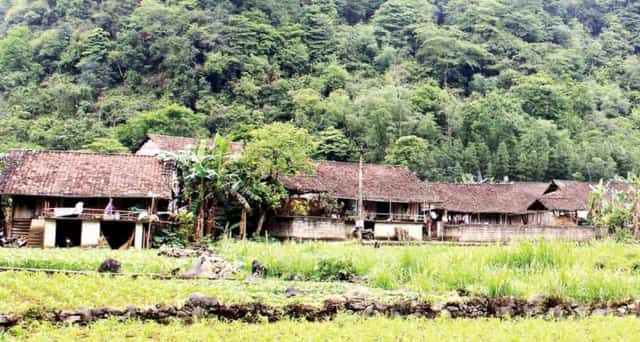
Traditional stilt houses of the highland ethnic communities, subtly appearing amidst swaying bamboo groves.
Standing atop Pác Thốc Mountain, overlooking Khau Cốc Chà Pass and the Đồng Mu valley in the heart of Xuân Trường commune, Bảo Lạc district, Cao Bằng, it becomes clear why in recent years, backpackers consistently choose Bảo Lạc as their stopover instead of the larger surrounding towns.
Thiên Di, a female backpacker well-known in various travel communities, shared: "For those of us with a passion for travel, this is one of those routes we return to whenever we get the chance; especially now that the 'Four Great Passes' have become too crowded and even dangerous due to increasing traffic.
Furthermore, this is also the route we frequently use when traveling from the frontier of the nation – Đồng Văn Stone Plateau – to Cao Bằng, as part of our Northeast loop adventure. The road runs along National Highway 4C, sometimes diverging, sometimes converging close to the jade-green Nho Quế River, before joining National Highway 34 alongside the winding Gâm River throughout the journey."
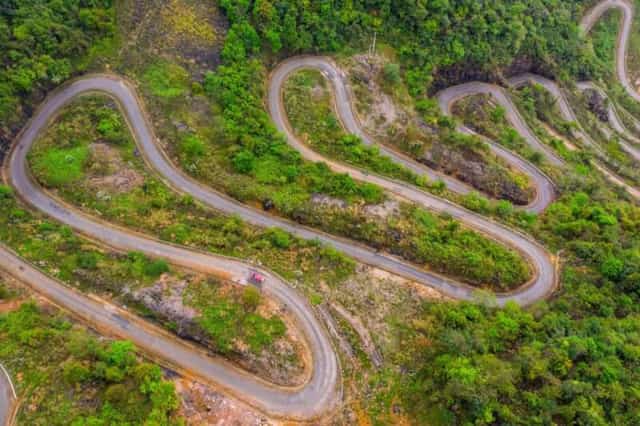
Khau Cốc Chà Pass, located in Bảo Lạc district, Cao Bằng province, began construction in 2009 and was inaugurated for use in 2011.
Vàng A Chữ, a Hmong ethnic resident of Xuân Trường commune, excitedly shared: “Less than a decade ago, locals wanting to traverse this pass to the summit of Mẻ Pia only had one means of transport: horses. Those pack horses, straining their backs to climb the formidable 15-tiered slopes, have now gradually been replaced by more convenient and faster motorized vehicles.”
Recently, in early July 2023, the province began redeveloping this road, more than 10 years after its initial opening, investing approximately 39 billion VND for upgrades, maintenance, and repairs. The project is expected to be completed by the end of 2023. Vàng A Chữ advises all travel enthusiasts eager to conquer these passes to avoid this period for their safety and convenience.
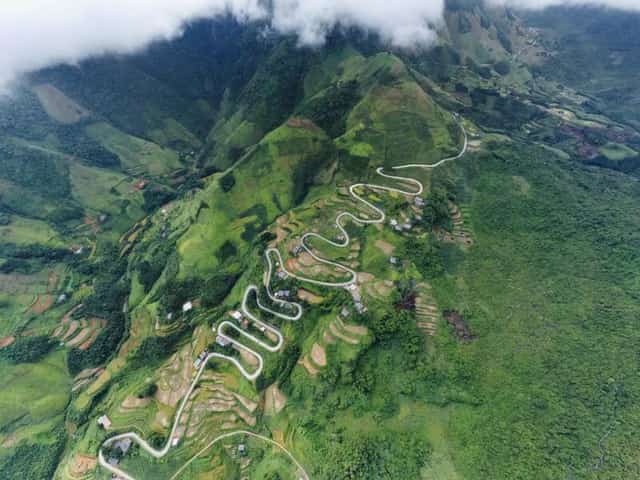
From Khau Cốc Chà, continue a short distance to the summit of Mẻ Pia Pass to proceed through the rocky terrain of Hà Giang.
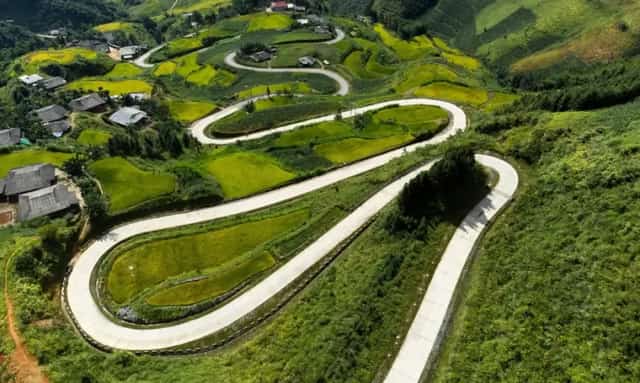
In the Tày language, Nà Tềnh means 'high field.' This beautiful and challenging 20-tiered pass borders Cần Nông commune in Hà Quảng district and Xuân Trường commune in Bảo Lạc district, very close to the border area.
Finally, there's the 'King of Passes,' Nà Tềnh, located in Cần Nông commune, Hà Quảng district. It lies on National Highway 4A, along the same route as Khau Cốc Chà Pass and about 18 km further, but it is even more winding and longer. Just past the summit of this pass, you enter Bảo Lạc district. Previously, the road was in terrible condition and extremely difficult to traverse, but it has now been repaired, making travel much more convenient.
While Khau Cốc Chà Pass leaves riders breathless with its 15 steep tiers, like stairs leading to the sky, Nà Tềnh Pass unfolds like a soft silk ribbon with 20 winding turns, weaving through villages amidst terraced rice fields glistening with water, shimmering like overlapping fish scales, creating an incredibly picturesque landscape.
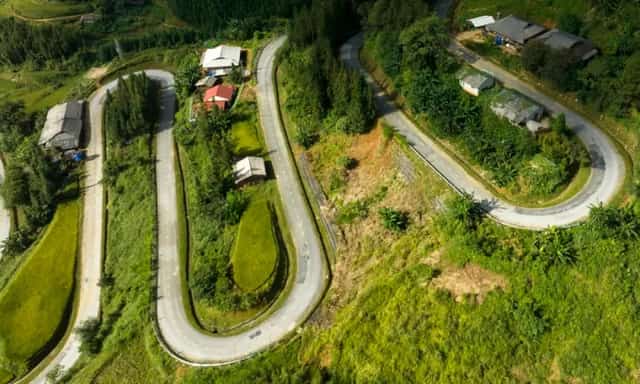
Nà Tềnh has been dubbed the 'King of Passes' by backpackers due to its treacherous route with 20 challenging hairpin bends and winding sections.
According to Mr. Hoàng Chí Bảo, a local tour guide from this region, traveling from Cao Bằng City to Hà Giang via this route is about 21 km shorter than taking National Highway 34. Moreover, the scenery along the pass is absolutely magnificent.
Motorcycle enthusiasts traveling between Cao Bằng and Hà Giang often prefer this winding route with its continuous series of bends, eager to test their riding skills. However, during this season of storms and winds, everyone should check the weather forecast, as heavy rain can lead to dangerous landslides and slippery conditions, Guide Bảo cautioned.
Cao Bang 6127 view
Update day : 16/07/2023
Source : Du lịch TP Hồ Chí Minh Affiliate links



Monuments close by
See all
Mac Dynasty Citadel in Cao Bang (Na Lu Citadel, Ban Phu Citadel, Phuc Hoa Citadel)
During the period when the Mac dynasty had its capital in Cao Bang, in order to prevent the Le dynasty from attacking, the Mac dynasty restored and repaired Na Lu citadel (now in Hoang Tung commune, Hoa An) and Ban Phu citadel (now in Hung Dao commune). ), Phuc Hoa citadel, in addition to building many other citadels in Cao Bang, making Cao Bang a political and military center in the far Northeast border region at that time. Na Lu citadel and Phuc Hoa citadel are two citadels built before. According to the records of Be Huu Cung in Cao Bang Thuc Luc, Na Lu citadel and Phuc Hoa citadel began in the reign of Tang Y Tong in the year Giap Than, the 5th Ham Thong era (874). Based on the presence of many ancient tombs with stone inscriptions containing the names, addresses, and hometowns of the citadel builders who died here during the Ham Thong Dynasty, it can be confirmed that these two citadels were built during the Tang Dynasty. Na Lu Citadel was built over many different dynasties. When the Mac dynasty came to Cao Bang, it was rebuilt with bricks. Na Lu citadel has a nearly rectangular shape, has a total area of about 37.5 hectares, a length of about 800 m, a width of about 600 m, the citadel has 4 gates. Ban Phu citadel in the capital of Nam Binh, Nam Cuong country of Thuc Phan in the past in Cao Binh (Cao Bang), the Mac dynasty renovated the royal palace in the inner circle of the old capital of Nam Binh and called it Ban Phu citadel or Royal Palace. In the ancient capital of Nam Binh of the Nam Cuong country and the Mac dynasty, Ban Phu citadel still has clear traces. The capital city of Nam Binh consists of two citadels, to protect the citadel, the outer ring has a circumference of about 5 km, including a low hillock area, around the foot of the hill is covered with vertical canvas like a wall, convenient for navigation. Build defense lines. The western wall of the citadel runs parallel to the bank of the Bang River to the beginning of Bo Ma village, connecting the southeast wall of the citadel, flowing in front of Ban Phu, following the foot of the hill to meet National Highway 4, the northeastern side running along the foot of the hill close to the outside of National Highway 4. , up to the top of the mound is the northwest side, continue running along the foot of the hill, out to the river bank and meet the west wall, forming a closed citadel. When the Mac Dynasty established the capital, it repaired and built a number of additional works, in which Ban Phu Citadel (inner citadel - the king's working place) was built higher on the old citadel walls from the Thuc Phan period. The citadel is located on a flat land. Along with rebuilding the capital, the Mac dynasty also built a system of posts and ramparts quite thick around the capital and a number of important border points, forming a system of protecting the capital and protecting the border. gender. Phuc Hoa citadel (Phuc Hoa district) was built in a square style, about 400 m in each direction, including two citadel rings, the distance between the two rings is 80 m. Currently, the southern wall has been completely destroyed. Phuc Hoa Citadel has 2 main gates: The North Gate is open to the national highway to Ta Lung Border Gate today, people often call it Pac Gate, this gate is built in a rectangular style, 8 m wide, 5 m high. , including two gates made of thick, very sturdy wood; The second gate is in the south, opening to the river bank. Both gates were flattened long ago, and now there are no traces left. Near the citadel, in the northwest suburbs along the riverbank, there are many traces of brick kilns. People said that during the process of labor and exploration, many intact brick kilns were found in this area. Through research and surveys, it has been shown that in Cao Bang, the Mac dynasty renovated, embellished and built many citadels and fortresses, including repairing, embellishing and rebuilding Ban Phu citadel, Na Lu citadel, and Phuc citadel. Hoa. These fortifications have formed a quite solid system of protecting the capital. Up to now, of the ancient citadels built by the Mac Dynasty during the capital period in Cao Bang, some of the citadels built of earth only have traces left, but the citadels built of stone are still very clear. Source: Cao Bang Electronic Newspaper
Cao Bang
11848 view
Rating : National monument
Kim Dong historical relic site
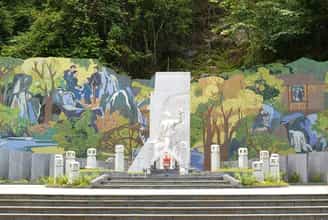
To commemorate the brave Captain of the National Salvation Children's Team who sacrificed his life while on duty to protect the revolution, the Party and State built the Kim Dong Heroic Martyr Monument in Na Ma village, Truong Ha commune (district). Ha Quang) Cao Bang province. May 15, 1941, forever shines brightly in the golden pages of traditional history of the Ho Chi Minh Youth Union. That day, near Coc Bo cave, down Lenin stream, at the foot of Thoong Ma mountain, in Na Ma village, Truong Ha commune, Ha Quang district, Cao Bang province, 5 teenagers including: Nong Van Den (alias Kim Dong ), Nong Van Than (Cao Son), Ly Van Tinh (Thanh Minh), Ly Thi Ni (Thuy Tien) and Ly Thi Xuu (Thanh Thuy), were enlightened and challenged by Duc Thanh and other revolutionary cadres. , gathered to form the National Salvation Children's Team according to the Party's decision; in which Nong Van Den was elected Team Leader. The Children's National Salvation Team has the purpose of participating in fighting the West, expelling the Japanese, and gaining independence for the country, with the tasks of transportation, transportation, protection of officials, and guarding Party meetings... From After May 1941, children's teams for national salvation were established everywhere to participate in the revolution. Many youth teams achieved outstanding achievements, brightening the golden history of the Children's Team, contributing to the victory of the People's Army. August Revolution 1945. In August 1942, Kim Dong had the honor of meeting Uncle Ho at Noc En cave on the mountain behind Na Ma village. He praised Captain Kim Dong for his cleverness, agility, and courage. He advised Kim Dong and his fellow members to help and actively protect the revolution, working while studying culture and politics so that the country can later gain independence and contribute to national construction. At 5 a.m. on February 15, 1943, while on guard duty at a meeting of the Viet Minh committee, when he discovered that the enemy was approaching, Kim Dong quickly created a diversion to protect the revolutionary cadres. The enemy opened fire, Kim Dong was hit and died, just 14 years old at that time. In 1997, Kim Dong was posthumously awarded the title Hero of the Armed Forces by the Party and State. Kim Dong Heroic Martyr Relic was built right in his hometown in Na Ma Village, Truong Ha commune (Ha Quang). The relic area includes Mr. Kim Dong's grave and his spacious statue at the foot of a massive high rocky mountain range, next to a green tree that always gives shade. Statue of Mr. Kim Dong wearing Nung clothes and holding up a homing pigeon. There is a large yard here. Every year, teenagers and children from the province and the whole country often gather here to organize new team members, camp, play, generations of Vietnamese children come to join the team. his first adult, came to the revolutionary homeland of Lenin stream, Cac Mac mountain and Pac Po cave forever engraved in the minds of Vietnamese children. Source: Cao Bang province electronic information portal
Cao Bang
8159 view
Rating : National monument

Dong Khe Victory Historical Relic Area
Dong Khe Victory Historical Site (1950 Border Campaign) is located in Na Lan, Duc Long commune, Thach An district, far from Cao Bang city. This is a relic associated with the revolutionary career of President Ho Chi Minh, with the victory of the 1950 Border Campaign, led by the Military Region Command, Military Region 1, Military Region II and Cao Bang province. construction coordination. The relic site was put into use on May 19, 2004, demonstrating the noble morality "When you drink water, remember its source" for the genius leader, the beloved father of the nation, and left a glorious mark. , the heroic victory of a strategically significant victory in the resistance war against the French colonial invasion. The relic site consists of 2 parts: President Ho Chi Minh Memorial House and Uncle Ho's monument cluster observing the Dong Khe battle on Bao Dong Mountain. The memorial house is designed in a modern stilt architectural style, displaying images and artifacts related to the activities of President Ho Chi Minh observing the battle on Bao Dong Mountain. The cluster of Uncle Ho's monuments observing the Dong Khe battle on Bao Dong mountain is made of imitation bronze composite material, 2.8m high, weighs 418kg, reinforced concrete columns, the entire statue is placed on a stone pedestal covered with floral tiles. . To get to Uncle Ho's Monument to observe the battle of Dong Khe on Bao Dong Mountain, go through 846 stone steps, divided into 79 steps, symbolizing Uncle Ho's 79 springs. Today's stone steps are the old road, on September 13, 1950, Uncle Ho left the Campaign Command Post to the Forward Command Post in Na Lan, went to Bao Dong Mountain to observe the battle of Dong Khe. Early in the morning of September 16, 1950, from an observation position on Bao Dong mountain, President Ho Chi Minh attentively observed and closely followed the developments of Dong Khe battle, opening the 1950 Border Campaign, creating money. for the nation's great victorious resistance war. On September 16, 1950, our army units opened fire to open the Campaign with a battle at Dong Khe base. Losing Dong Khe, the enemy army in That Khe fell into a threatening situation, Cao Bang was isolated. Faced with the risk of being destroyed, the French army was forced to withdraw from Cao Bang along Route 4. To support this withdrawal, France mobilized troops from That Khe to retake Dong Khe and welcome troops from Cao Bang to withdraw. ; At the same time, send troops to attack Thai Nguyen to attract our main force. Guessing the enemy's intentions, our army proactively ambushed and blocked the enemy in many places on Route 4, making it impossible for these two armies to meet each other. It was That Khe's turn to be threatened. On October 8, 1950, the French army had to withdraw to Na Sam; On October 13, 1950, France withdrew from Na Sam to Lang Son. Meanwhile, the enemy's march to Thai Nguyen was also blocked by our troops. The French army became panicked and had to retreat. On October 22, 1950, Route 4 was liberated. On October 3, 1950, Cao Bang province was liberated, marking an important milestone in history, becoming a major anniversary day of Cao Bang every year. At the end of the Border Campaign, we eliminated more than 8,300 enemies from combat, liberating the entire Vietnam-China border from Cao Bang to Dinh Lap with 350,000 people, with an area of 4,500 km2; breaching France's "East-West Corridor". The enemy's siege both inside and outside of the Viet Bac base was broken. The victory of the Border Campaign changed the war situation between us and France, creating a new change in attack and counter-attack strategies, contributing to bringing the resistance war to victory, culminating in the campaign. Dien Bien Phu, moving towards the great victory in the spring of 1975, completely liberating the South, unifying the country, moving towards socialism. Source: Cao Bang province electronic information portal
Cao Bang
8063 view
Rating : Special national monument

Tran Hung Dao Forest Relic
Tran Hung Dao Forest Special National Relic Area is located at the foot of Slam Cao Mountain in Tam Kim and Hoa Tham communes (Nguyen Binh district, Cao Bang province). This is where a system of relics associated with a particularly important historical period of the Vietnamese revolution is kept. Tran Hung Dao Forest Special National Relic Area is the place marking the establishment and activities of the Vietnam Liberation Army Propaganda Team, the predecessor of the Vietnam People's Army. At the same time, this is also the place associated with the life and revolutionary career of General Vo Nguyen Giap - an excellent student of President Ho Chi Minh. The relic area includes 5 important points: Tran Hung Dao forest relic cluster (including the location of the establishment of the Vietnam Liberation Army Propaganda Team, the rest shack and kitchen, the water mine for domestic water, and Slam Cao Peak); Tham Khau Cave (Tam Kim commune) - was once used as a communication station, serving meals to revolutionary comrades; Phai Khat Fort (Tam Kim commune) - where the first battle of the Vietnamese Liberation Propaganda Army team took place (December 25, 1944); Na Ngan Fort (Hoa Tham commune) - the place marking the second victorious battle of the Vietnam Liberation Army Propaganda Team (December 26, 1944); Va Pha relic (Tam Kim commune). With these historical values, in 2013, the Prime Minister decided to classify Tran Hung Dao Forest Historical Relic (Nguyen Binh district, Cao Bang province) as a special national monument. The exhibition house at the relic site, after being completed and put into use, has contributed to honoring and paying tribute to the previous generation, while preserving, embellishing and promoting the value of the relic site. Artifacts here are displayed centrally, ensuring true scientific and historical value according to 3 themes: Cao Bang - Country, people and traditions; The process of formation, birth and operation of the Vietnam Liberation Army Propaganda Team; Glorious traditional heroic army. The special national relic site of Tran Hung Dao forest is not only a red address of glorious historical tradition with many relics but also a primeval forest. With an area of over 201.7 hectares, Tran Hung Dao forest has a wild beauty with fresh air. Deep under the canopy of ancient trees is the stele house of 34 soldiers of the Vietnam Liberation Army Propaganda Team, with tents and kitchens simulating the simple daily life of the soldiers. Following a small slope about 50 meters is a natural water mine, also a water source for soldiers, which has been producing cool and clear water for many years. Also in Tran Hung Dao forest, a 300-year-old ancient crocodile tree that was closely associated with the daily life of the Vietnam Liberation Army Propaganda Team has been recognized as a Vietnamese Heritage Tree. Over the past 75 years, the vestiges from the early establishment of the Vietnam Liberation Army Propaganda Team have always been respected and preserved by ethnic people of Cao Bang province, contributing to educating patriotism and revolutionary traditions. for future younger generations. The vast primeval forest spreads out each canopy, covering the sacred relics of the arduous revolutionary activities of General Vo Nguyen Giap and the Vietnam Liberation Army Propaganda Team. Source: Vietnam National Tourism Administration
Cao Bang
7950 view
Rating : Special national monument
Historical relic site of the Voice of Vietnam at Nguom Chieng cave
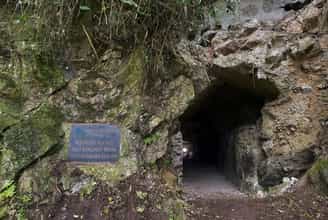
Location of the Voice of Vietnam at Nguom Chieng cave (1966 - 1978), in Trung Khanh town, Cao Bang province. Nguom Chieng Cave, with its rugged terrain and solid terrain, was chosen as the place to set up a backup station of the Voice of Vietnam (called Dien Radio A3). The A3 radio broadcasting station was the evacuation site of the Voice of Vietnam during the resistance war against the US invasion from 1966 to 1978. This is one of the important "bases" responsible for relaying and broadcasting. broadcasting to Finland and Northern European countries, contributing to ensuring that the Voice of Vietnam's broadcast is maintained and smoothly, transmitting the voice of the Party and Government, the voice of the Vietnamese people steadfastly. strong and proud on the front line against America, winning independence and freedom for the Fatherland. Over 10 years of operation (from the first day of broadcasting on April 24, 1966 to 1978), Radio A3 has successfully completed its historical mission, marking many memories of the arduous period of resistance against the US to save the country. magnanimity, especially of radio people with their bravery and burning revolutionary enthusiasm. At the beginning of construction, Dien Dai A3 was called Site 50. During the two-year construction period, at one point, up to 300 workers had to be mobilized to pave the way and explore the surrounding area to ensure broadcasting. bar as fast as possible. When chosen as the place to set up a backup station for the Voice of Vietnam, Nguom Chieng was expanded into a very wide and deep cave through the mountain. In front of the cave entrance on the left is a solid stone ventilation house. Inside the cave, 3 houses were built to house generators and warehouses. At the end of the cave is also an empty space and finally the path to the back door is built with 124 steps leading out of the cave behind the mountain and is also where the receiver system is located. Standing here, you can observe National Highway 4A leading to Ban Gioc Waterfall and the surrounding area. In addition to the main cave, there is also a secondary cave with a narrower cave to place the dynamo system. In front of the cave is a row of mechanical buildings on the right, further to the left is the security force's house and the cafeteria. All of these rows of houses are built of very solid and sturdy stone. The more flat and empty space in front of the cave entrance is where the transceiver antenna system is located. Over a long period of time with the impact of nature and humans, currently the houses built in Nguom Chieng cave to place transmitters and radio transmitters have been destroyed, leaving only the tiled and marble floors. The foundation system of the house, at the end of the cave, still has 124 steps leading to the back door where the receiver is located. The small cave on the right to place the dynamo system currently still has a cement and stone pedestal and reinforced steel. In front of the cave entrance, the rows of mechanical houses, the security force's house, the cafeteria and the water tank are still intact, currently only the roof is damaged. All rows of houses are built of solid and sturdy cement and stone. The land area to place the antenna columns is currently the rice fields of people in Bo Da hamlet, Trung Khanh town, Trung Khanh district. Nguom Chieng cave relic has an area of protection zone 1 of 6,616.7m2 and protection zone 2 of 42,016.6m2. With the above typical value, the location of the Voice of Vietnam at Nguom Chieng cave (1966 - 1978), was ranked a National Historical Monument by the Minister of Culture, Sports and Tourism on June 29. /2021. Source: Department of Cultural Heritage
Cao Bang
7841 view
Rating : National monument
Nearby tourist attractions
See all
Nguom Ngao Cave
Traveling to Cao Bang has never ceased to be interesting because this Northeast mountainous land contains countless interesting things that make visitors want to continue to explore and experience. Among them, it is impossible not to mention Nguom Ngao cave - one of the most beautiful caves in the country, a priceless gift given by the creator. Nguom Ngao Cave is located in Gun village, Dam Thuy commune, Trung Khanh district, Cao Bang province. The cave was discovered by a French explorer in 1921 (20th century). According to a survey by the British Royal Cave Association in 1995, this cave has a total length of 2,144m, with 3 main doors: Nguom Ngao, Nguom Lom and Ban Thuon. To reach Nguom Ngao cave, you need to cross 89km of mountain road, through Ma Phuc pass and Khau Lieu pass. Your trip to Cao Bang will be extremely flawed if you do not visit Ban Gioc Waterfall combined with a visit to the Cave, the distance of these two points is only about 3km. Nguom Ngao Cave is about 2,144m long but has only been exploited for nearly 980m. The inside of the cave is almost pristine with hundreds of unique and attractive shapes. According to research by scientists, Nguom Ngao is a limestone cave formed 300 million years ago. Over time, stalactites and stalagmites have created vivid and wonderful scenes that make people admire and wonder. According to legend, in the past, there were many fierce tigers living in the cave, so the Tay people named the cave Nguom Ngao with the meaning: Tiger Cave. However, there is a theory that the roaring sounds are made by the sound of water flowing from the stream inside the cave, which sounds like the roar of a Tiger, so the people named the cave Nguom Ngao. Nguom Ngao Cave, like many other caves, was formed by the long-term weathering of limestone mountains. Just taking the first steps into the cave, we will feel like we are lost in another world, completely separate from the outside world. It takes a long time for the unique shapes in the cave to be formed, including vertical stalactites, horizontal stalactites, stalactites with clear shapes, and there are stalactites that only those who like to imagine can see the shape. Exploring Nguom Ngao Cave, visitors can also discover countless special shapes inside the cave, images of terraced fields, fairy beds, miniature Ha Long Bay, statues of the three gentlemen Phuc - Loc - Tho, gold mountain, silver mountain... also created very specially. Nguom Ngao Cave is also associated with many stories and legends, including the story of an upside-down lotus flower. When entering Nguom Ngao cave, if you pay close attention, you will see that in the middle of the cave is an upside-down lotus-shaped stalactite. The story goes that, once upon a time, there was a monk who sat on a lotus stem and practiced endlessly without achieving righteous results. Because he was so bored and frustrated, he turned the lotus stem upside down, and he himself turned into a stone pillar standing next to the upside-down lotus stem. It's easy to understand why people say you will be overwhelmed from the first moment you step into the cave. The average temperature in the cave is about 15-20 degrees, so it always makes you feel cool and comfortable, much different from the outside temperature, especially when you travel to Nguom Ngao cave in the summer. Especially in Nguom Ngao cave, where there is a gap leading to the sky, at exactly 14:00 on April 22 every year, there will be 3 streams of light meeting, making a space inside the cave as bright as day for a few minutes. This is a beautiful natural phenomenon and many tourists have to admire the bright light in Nguom Ngao cave at this moment. Traveling to Cao Bang means experiencing the most natural things, scenes of breathtaking beauty. Surely the beauty of Nguom Ngao cave will make you miss it and not want to return.
Cao Bang
7779 view
From January to December

Ban Gioc Waterfall
Ban Gioc Waterfall is located about 90km from Cao Bang city and 400km from the center of Hanoi capital, in Dam Thuy commune, Trung Khanh district. Starting from Cao Bang city, you can go in the direction of Tra Linh - Tong Cot to reach Ban Gioc. For those who are passionate about backpacking, they can choose the route through Ma Phuc Pass because the mountain scenery along the way is very beautiful and attractive. The climate at Ban Gioc waterfall in Cao Bang is divided into two distinct seasons: rainy season and dry season. The rainy season starts from June to September. This is also the time when the waterfall pours water and white foam, very suitable for trips to Ban Gioc waterfall, especially in August - September. The waterfall in the dry season has a completely different nuance. At this time, Ban Gioc Cao Bang waterfall is quite peaceful, the golden rice fields at the foot of the waterfall create a romantic, but also very peaceful scene. When you come to Ban Gioc Waterfall, you can enjoy specialties such as: Da Hien vegetable, Bo Khai vegetable, Coong Phu cake, Trung Khanh chestnut, sour pho, bee pupa porridge, string sweet soup, bitter sweet soup, banh kha, Bao Lac plum, Dong Khe pear, Thang Hen lake fish, sour bamboo shoots, sausages, roasted duck, roasted pork...
Cao Bang
7685 view
From June to September

Phia Oac National Park - Phia Den
Phia Oac - Phia Den National Park is a special forest located in the Non Nuoc Cao Bang park system. This place is recognized by UNESCO as a Global Geopark because of its special geological system with high mountains, many rare minerals and a diverse ecosystem, with many rare flora and fauna species. The area of Phia Oac - Phia Den national park stretches across the area of 5 communes Thanh Cong, Hung Dao, Quang Thanh, Phan Thanh and Tinh Tuc in Nguyen Binh district, Cao Bang province and about 73km from Cao Bang city center. . This is a place with beautiful natural scenery, fresh air and especially snow and ice in the winter, so it is ideal for ecotourism development. Phia Oac - Phia Den is located in a global geopark area, so the terrain here is also very diverse and rich, from sunken valleys like deep basins, winding rivers creating a beautiful scenery. charming poetry to the towering mountain ranges creating a majestic and magnificent scene. Phia Oac - Phia Den are the names of two high peaks in the national park. Phia Den mountain peak is 1,391m high and Phia Oac mountain peak is 1,931m high, considered the western "roof" of Cao Bang province. In addition, within this national park there are also many other impressive high mountains such as Tam Loang peak 1,446m high, Niot Ti peak 1,574m high. In addition, Phia Oac - Phia Den National Park also has a diverse and special geological structure with a mixture of terrigenous rocks, limestone and granite creating many rare minerals such as silver, gold, tin, tungsten... This place is divided into 3 main areas: strict protection area, ecological restoration area and administrative service area, with diverse vegetation such as subtropical monsoon forests, closed evergreen humid tropical forests. tropical forest and a typical primary forest type of Northern Vietnam, which is dwarf forest, also known as moss forest. Within the Phia Oac - Phia Den National Park, there are up to 1,287 diverse plant species, including up to 90 rare and endangered plant species, which are recorded in the Vietnam Red Book as ironwood. rocky mountains, incense sticks, honeycombs, pa co pines, flower slices and gnats... Furthermore, on Phia Oac mountain there are many precious medicinal herbs of Vietnam such as Heptaphyllum flower, Cordyceps sinensis, mountain ginseng... Not only diverse in flora, Phia Oac - Phia Den also has a rich animal ecosystem with 496 different species of vertebrates and thousands of species of invertebrates and insects... In particular, there are up to 58 species in this ecological forest that belong to the group of rare animals, including 30 types of mammals listed in the Vietnam Red Book, 12 species of reptiles, of which 12 species are extremely rare and need to be protected. conserve. This is an extremely rare resource with high economic value and conservation value. Therefore, in addition to beautiful natural scenery, Phia Oac - Phia Den National Park is also a conservation area that Cao Bang province and the government pay attention to. It can be said that nature has been extremely kind when giving Phia Oac - Phia Den National Park a fresh and cool atmosphere throughout the four seasons. The blend of deep green vegetation with rolling mountains and lazily flying white clouds creates a poetic natural scene, as beautiful as a fairyland. On clear days, standing on the top of Phia Oac mountain, visitors can see the majestic mountain scenery. In particular, with its cool climate, low average temperature, and high humidity, Phia Oac - Phia Den National Park is like a paradise of flowers with brilliant colors, wild and enchanting beauty. or, praised by many tourists as the "sleeping fairy" of the Northeast mountains and forests. Scattered around Phia Oac - Phia Den National Park are villages, streams, hillsides, terraced fields grown by ethnic minorities, fields of corn, cassava, vast tea forests... create beautiful natural paintings full of vitality. Furthermore, Phia Oac - Phia Den National Park still has traces of ancient villas or European-style motels left by ancient French civil servants, so you can visit European architectural works. here too. In addition, visitors can visit other tourist destinations such as the Khay Phat fort relic, the beeswax printed brocade weaving village of the Dao Tien ethnic group, Tinh Tuc mine, Kolia tea hills, salmon farms, etc. .. Although each time this place has its own unique flavor with poetic and majestic scenery, the most attractive tourist attractions are still spring and winter. When spring comes, Phia Oac - Phia Den National Park seems to be transformed into a brilliant new outfit with countless wild flowers blooming. From the seductive red of azalea flowers to the fresh jade green of hydrangeas or the dreamy purple, white, and yellow of wild orchids. In particular, the cool climate and high humidity of this place seem to energize the flowers to bloom bigger, brighter, and the fragrance emitted is also passionate and ecstatic, making everyone forget the way home. . In the coming winter, when the temperature begins to drop, the Phia Oac - Phia Den mountains are immersed in a beautiful white color like the European sky. Frost covers the top of the mountain, white mist hovers around, making visitors feel like they are lost in a fairyland.
Cao Bang
7636 view
From January to December

Pac Bo relic
The Pac Bo historical relic complex is located in Truong Ha commune, Ha Quang district, Cao Bang province. According to the Tay - Nung ethnic language, Pac Bo means "watershed". This is the place chosen by Uncle Ho as the revolutionary leadership base and is the place with an important mark in the nation's resistance war against the French and the Americans. Experiencing important milestones after all these years, this place still retains almost intact the evidence and imprints of the revolution and of President Ho. Pac Bo Cao Bang is covered with rugged mountains, beckoning waterfalls, and cool green bamboo groves throughout the sky. In addition to the beautiful scenery of the country, visitors can visit historical places such as Lenin stream, Karl Marx Mountain, President Ho Chi Minh memorial, Pac Po cave... Exploring the Pac Bo Cao Bang historical relic site, visitors will be immersed in the mysterious wild natural space and feel the historical and cultural values of this land. In the past, Lenin Stream was called Khuoi Giang stream by the villagers, which in the Tay language means heavenly stream, but in 1941, when Uncle Ho returned to the country and chose Pac Bo cave to live and work, he named this stream Lenin stream. Lenin Stream is located in the Pac Bo Cao Bang historical relic site, famous for its clear blue water that can be seen at the bottom like a mirror reflecting the great landscape of heaven and earth, creating a beautiful landscape. This destination is loved by many people because of its quiet space and poetic and lyrical scenery. There really is no beautiful word that can describe the beauty and purity of the Lenin stream. As history passes, this stream still retains its full beauty and increasingly attracts tourists because of the loving and graceful beauty of the water. Coming here, visitors will feel the place where Uncle Ho once lived, feel his warmth, and see the scenes that he was attached to during the resistance period. A destination not to be missed when coming to Pac Bo Cao Bang is Cac Mac Mountain. Along with the Lenin Stream, Karl Marx Mountain was also named by Uncle Ho. These are the names of the two thinkers who had the greatest influence on Uncle Ho's revolutionary career. Karl Marx Mountain has deep green forests with open terrain inside but is dangerous and secret outside. Perhaps because of such terrain, Uncle Ho chose it as a place for secret operations. Near the edge of Cac Mac mountain, along the Lenin stream, visitors will see the bamboo garden that Uncle Ho planted still exists. Everything seems to create a peaceful, poetic space for the place where Uncle Ho once stopped. "In the morning go to the stream, at night go to the cave" Uncle Ho's poem in the poem Pac Bo Scene describes Uncle Ho's daily life when he worked in Pac Bo Cao Bang. Pac Bo Cave, also known as Coc Po Cave, is only about 15 square meters wide. It is where he lived and worked when he first returned to the country. This is a place that contains many of his imprints. In the Cave, there is a wooden counter where Uncle Ho rested, a fire to warm himself, an unsteady stone table where people worked, or a stone made of Uncle Ho's size to sit fishing next to the Lenin stream, a bamboo garden next to the cave that Uncle Ho personally planted... all of it. are still there, and have become important historical markers of the Pac Bo historical site. Coming to the Pac Bo historical site, don't forget to visit Uncle Ho's temple located on Tieng Chit hill. The temple was built in May 2011 on the occasion of Uncle Ho's 121st birth anniversary. The temple was built in a stilt house style that is extremely close and familiar to the ethnic people here. This is not only a tourist destination for many domestic and foreign tourists, but also has historical and cultural value and shows respect and sacred affection for Uncle Ho - the man who devoted himself to the world. for the independence of the nation. Pac Bo Cao Bang is a charming place, every season has its own beauty. However, if you want to see the full beauty of this place, you should choose to come from October to May. At this time the weather is cool, not too cold nor too hot, and the weather is dry and convenient for traveling. Pac Bo's bumpy mountain roads. Especially, you can fully admire the poetic beauty of Lenin stream. Lenin Stream is famous for its beautiful turquoise water color, but during the year there will be about 2-3 months of rainy season (from July to September), the water flows so the water surface will not be clear, making it difficult to enjoy. enjoy the warm, poetic beauty of the place where Uncle Ho's footsteps were once imprinted.
Cao Bang
7362 view
From January to December

Ho Thang Hen
Thang Hen Lake, hidden behind the canopy of old forests and cat-eared cliffs, is a blue diamond-shaped lake with four seasons. The Tay people say it resembles the tail of a bee, so they call it Thang Hen ("bee tail" in the Tay language). Thang Hen is the largest freshwater lake among the 36 freshwater lakes in Tra Linh district. Although they are separated, they are connected by underground caves. The lake water is hazy jade green all year round, even during flood season - when other lakes in the same area are red with mud. The reason is because the lake's upstream is Thang Hen cave at high altitude. Water pouring out from the mouth of the cave provides a source of "clean water" for the lake. According to the legend of the Tay people, in the past, Cao Bang land had a handsome and intelligent man named Sung. After passing the exam, the king allowed him to return to honor his ancestors for seven days. Returning to his hometown, he married Miss Booc. He was so absorbed in his beautiful wife that he forgot to return to the capital. It wasn't until the night of Saturday that Mr. Sung suddenly remembered. He quickly said goodbye to his wife and ran back to the capital in the middle of the night. Mr. Sung ran 36 steps before falling, hitting his head on the mountain and dying. His 36 steps are 36 large and small lakes in the Thang Hen lake complex (now in Tra Linh district). As for the rock caves surrounding the lake, they were created by Mr. Sung's toes. Every year in September and October, Thang Hen Lake's water will be drained in just a few hours. Therefore, witnessing this strange phenomenon is extremely lucky. Even the indigenous people can only estimate the time and are not sure when the lake will dry up. When the water is barely scratched, people will race to the lake to catch fish, shrimp, and shrimp to eat. Big fish are the top "hunting" targets to grill for guests. Strangely, even though thousands of cubic meters of lake water dropped, the surrounding landscape remained unchanged. Therefore, many people compare Thang Hen Lake to a bag of water whose bottom has been punctured by someone. Local people spread word of mouth that the phenomenon of Thang Hen Lake drying up in just one night was a sea monster that had been imprisoned in the valley for many years. In the frenzy of being hunted, it used its claws to create underground caves vertically and horizontally. To enjoy the beautiful scenery of Thang Hen, you should not sleep late. When the sun just peeks behind the mountains is the best time to immerse yourself in the wonderland here. At this time, the lake surface is like a jade mirror covered with a white veil. Looming around are hidden mountains. The early morning scene here is strangely peaceful, completely separate from the hustle and bustle of the city outside. Thang Hen Lake area has steep rocky cliffs. On it, visitors can easily recognize wooden trees that are hundreds of years old and many varieties of wild orchids. This is the habitat of wild animals such as: golden monkeys, partridges, crows...
Cao Bang
7010 view
From January to December
 AI Travelviet